

 By Edito
 By Alabama O
The International Committee of the Red Cross (ICRC) has urged Nigerian journalists to use their platforms to amplify the voices of people affected by armed conflict and humanitarian crises.
The ICRC Head of Delegation in Nigeria, Doris El Doueihy, made the call in Lagos while opening a two-day humanitarian reporting training workshop for journalists from across the country.
El Doueihy said humanitarian reporting should go beyond documenting the distribution of food and other emergency supplies to highlighting the experiences and needs of affected communities.
She said humanitarian action was not limited to providing material assistance, stressing the importance of communicating the experiences of people affected by conflict and other crises.
“Humanitarian needs are not only about responding by assisting people. It’s also about carrying their stories and ensuring that each and every one in the country and beyond the country knows about the suffering of the people,” she said.
According to her, effective collaboration between humanitarian organisations and the media was essential to ensuring that the realities confronting vulnerable populations were properly understood.
The ICRC official said the organisation’s operations in Nigeria had historically been concentrated in the North-East due to the prolonged armed conflict in the region, but were gradually extending to the North-West.
“It’s true that the ICRC in Nigeria is covering mainly the areas where there’s conflict, which is the North-East. Now, we are shifting a bit to the North-West,” she said.
She added that journalists operating outside conflict-affected areas also had an important role to play in reporting the experiences of victims.
“You, even if you are not in Adamawa, you are the voice of the people who are there. You are the voice of the people who don’t have a voice sometimes,” El Doueihy said.
“In the conflict, the narrative is very important.”
She said the training was not intended to influence the editorial decisions of participating media organisations or dictate how journalists should report on the ICRC.
“We’re not here to tell you what to say about the ICRC or how to report on the humanitarian crisis,” she said.
“We’re here to talk in full transparency about how we see who we are, how we work, and how we see our relationship.”
El Doueihy stressed the importance of an independent press, saying journalists should remain free to question humanitarian organisations and report what they observed.
“It’s very important that the media remain free from dictating what should be said or not said… We need those free voices around the world. We need people to translate the reality of the suffering of the people on the ground,” she said.
She said the objective of the engagement was not for the ICRC and media organisations to agree on all issues, but to promote mutual understanding and access to accurate information.
“We don’t have to agree all the time. This is not the aim,” she said.
“The aim is for us to know you better and for you to know the ICRC better, so whenever you’re reporting on anything, you have the full picture.”
Against the backdrop of increasing armed conflicts and humanitarian emergencies globally, El Doueihy urged media organisations to strengthen first-hand reporting by deploying journalists to affected communities and humanitarian operation sites.
She said direct exposure to humanitarian operations would help journalists better understand the challenges confronting affected populations and humanitarian workers.
“It will be good if there is a possibility sometime for you to go to the field and see with your own eyes how the ICRC works, how the team is responding to that humanitarian crisis, so you can have a better understanding also of the reality on the ground,” she said.
El Doueihy commended the diversity of journalists participating in the training and described them


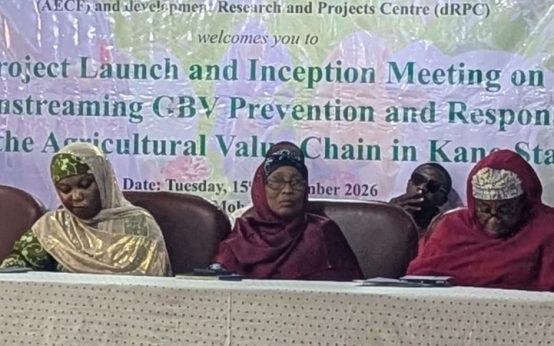 Kano, partners target 16,000 women as new GBV prevention project takes off
 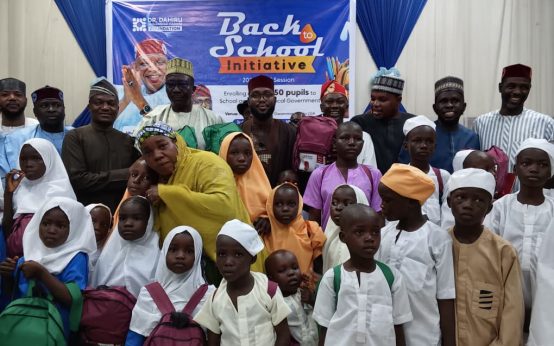 Foundation enrols 150 Kano pupils, distributes school materials
 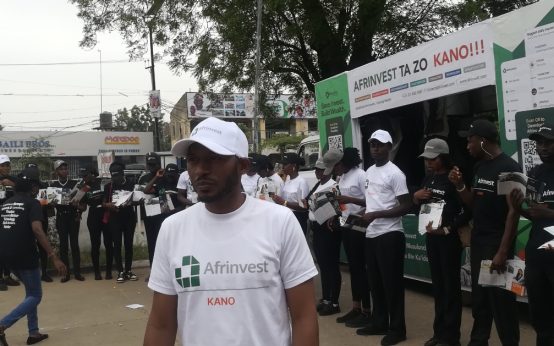 Afrinvest to launch Shariah-compliant investment products in Kano
 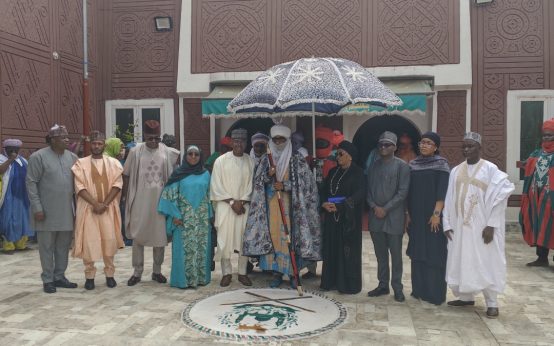 Afrinvest Foundation unveils 35-seater ICT centre at Kano Emir’s Palace
  Shari’a Commission urges parents to instil moral, religious values in children
  JonahCapital disowns ICC arbitration claim against FG, petitions EFCC